International Appalachian Trail (IAT) Ulster-Ireland for Transa 4-Seasons Magazine
The International Appalachian Trail (IAT) Ulster-Ireland is a 279 mile long-distance walking route in the north of Ireland. Starting at Slieve League cliffs in County Donegal, it follows the Blue Stack and Sperrin Mountains, the Causeway Coast, and the Glens of Antrim before finishing in Larne, County Antrim.
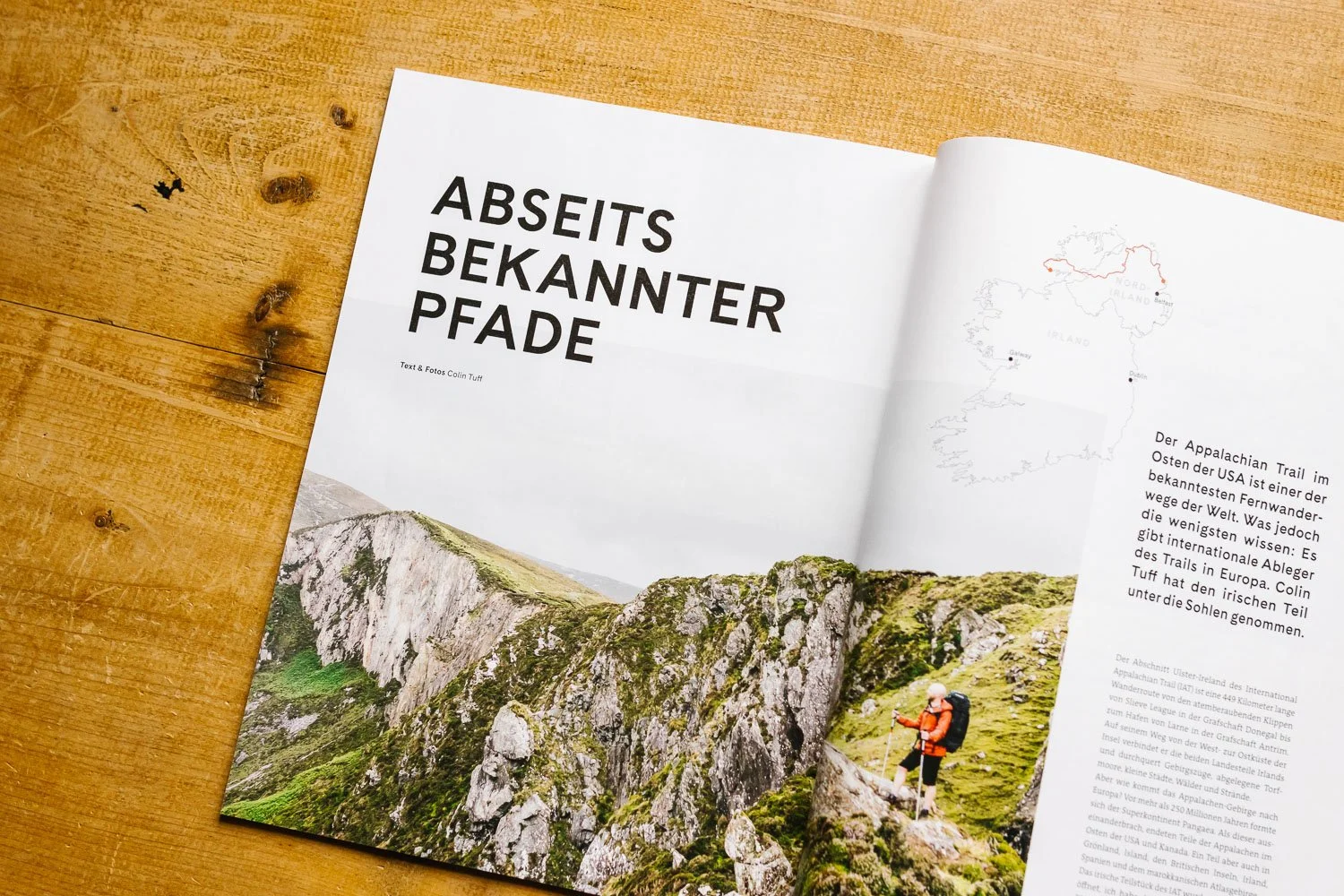
IAT Ulster-Ireland article for Transa 4-Seasons magazine
It was a series of remarkable coincidences that sparked my fascination with the Ulster-Ireland section of the International Appalachian Trail—leading to both a newfound love for my home country and the reigniting of an old creative passion along the way.
It all began in June 2023 while on holiday in the small Gaeltacht village of Glencolmcille in the southwest corner of Donegal, staying in a cottage well known to us from previous trips there throughout the years. We were enjoying an uncharacteristically warm and sunny spell of weather that month in Ireland, and this isolated bolthole overlooking the ocean was an ideal base for us to unwind.
The great weather meant long days and dry trails. Early each morning I slipped on my running gear and welcomed in the new day from one hilltop or another, eagerly following the intricate network of well-worn boreens and walking paths that spread from the front door of the cottage like a spider's web. It was ‘time on feet’ exploring my favourite corner of the country, and I loved every exhausting second of it.
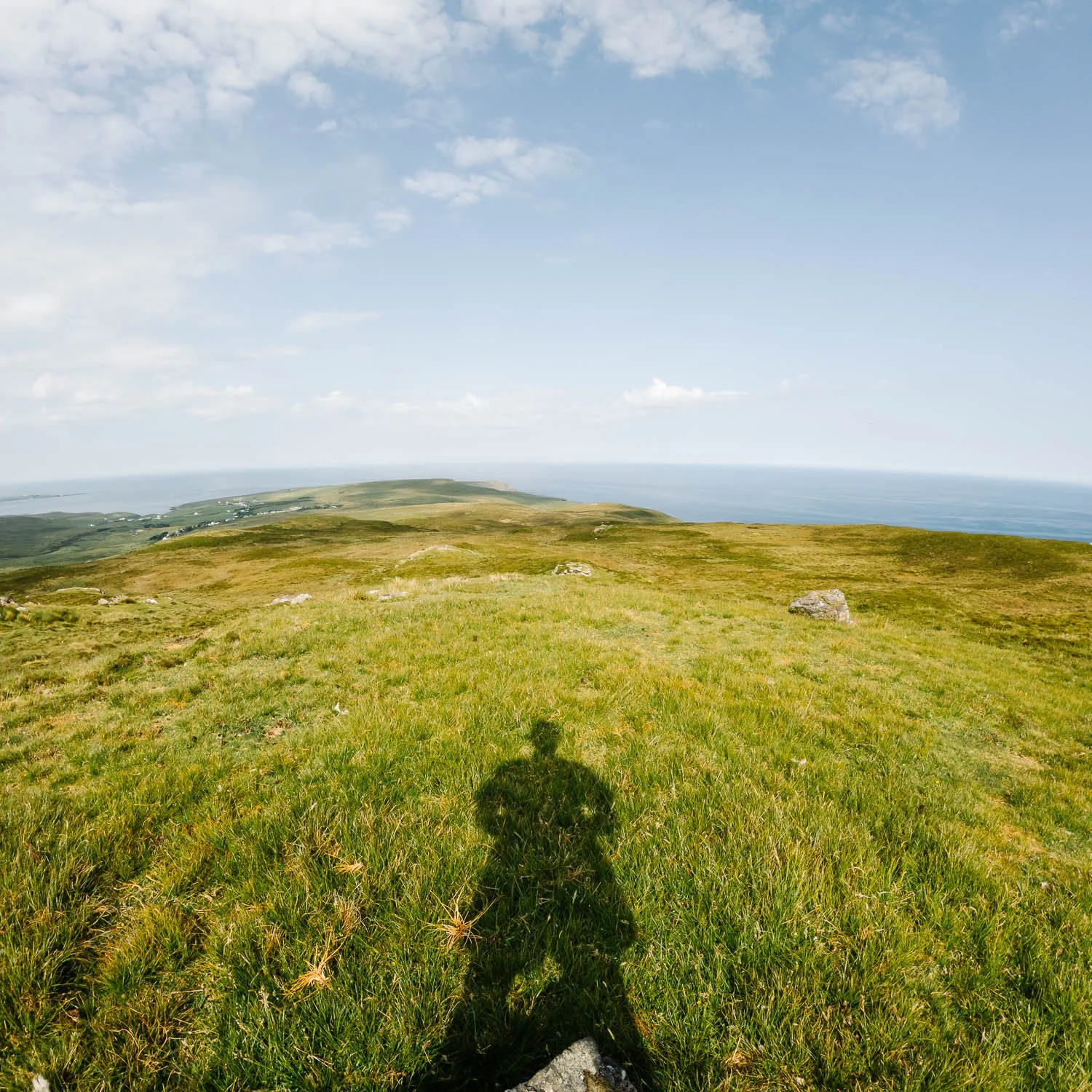
Morning run on the IAT
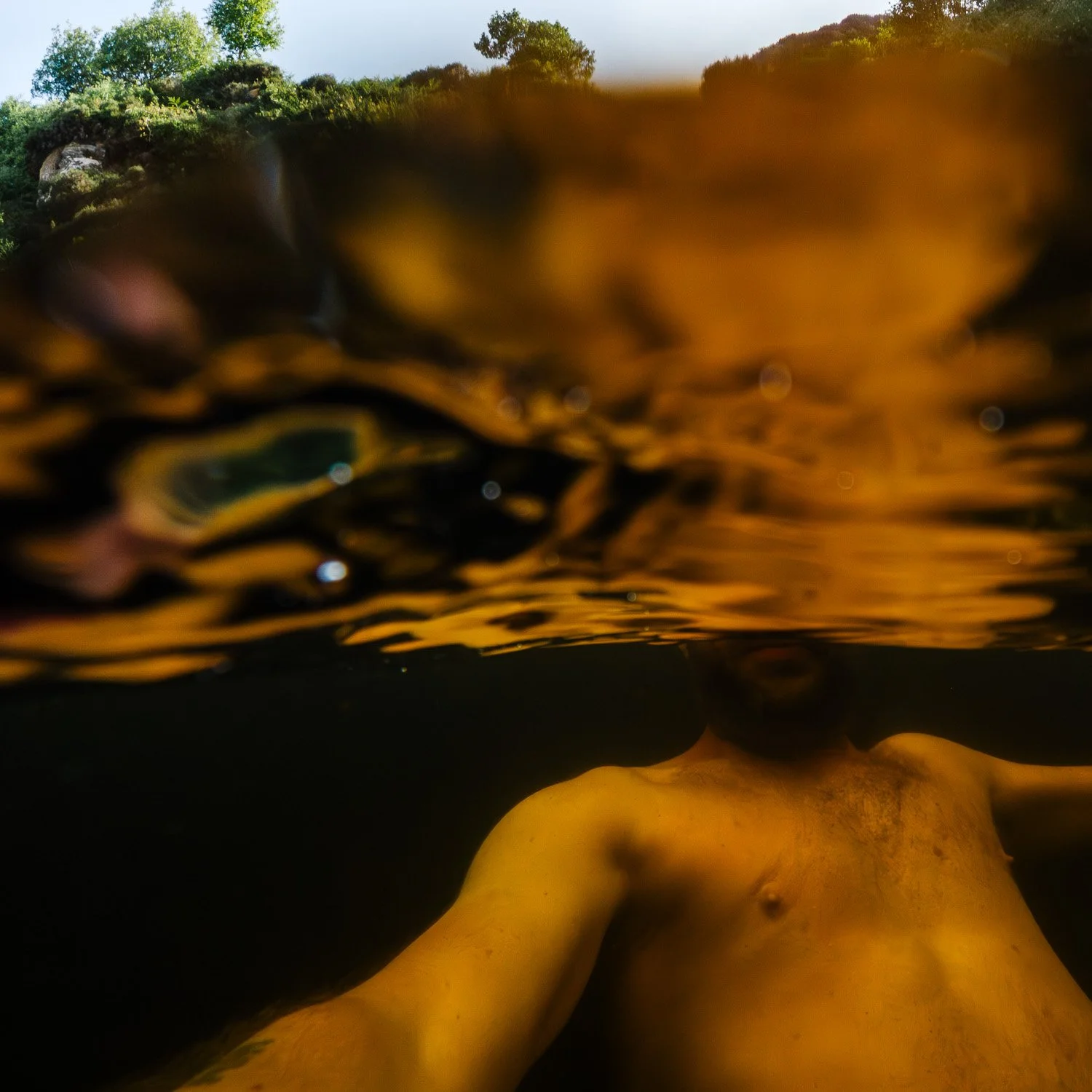
Wild swim in Assaranca Waterfall
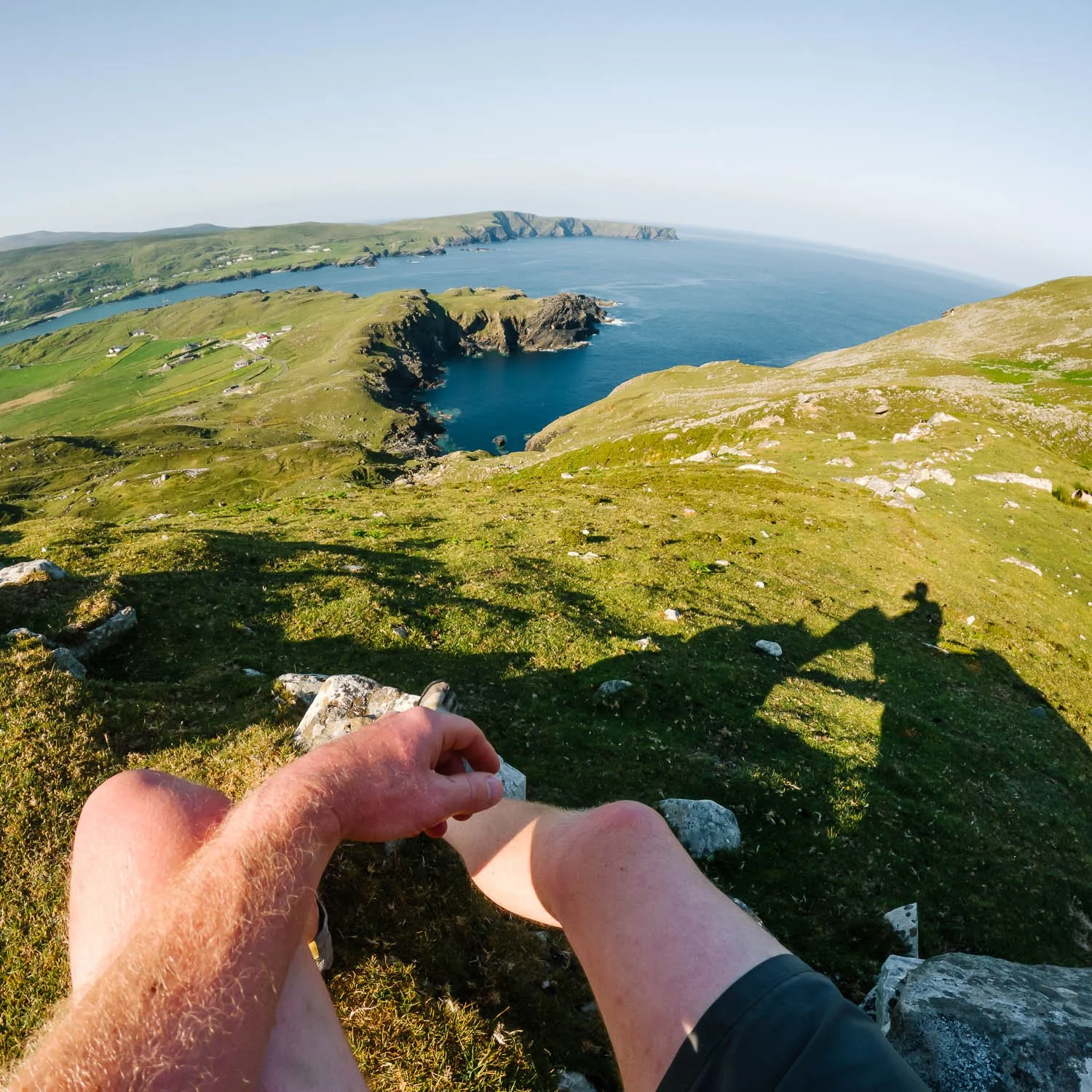
Morning run to The Sturrall on the IAT
[above] a few GoPro photos from the holiday
When not out enjoying the local area, we both took full advantage of the cottage’s creature comforts and worked on reading our way through the impossibly tall stack of library books we’d brought along for the trip. As had become the norm on our holidays, there was an eclectic mix of genres on offer, covering all bases from gruesome detective novels to motivational self-help playbooks. One of the titles—a last-minute addition to the pile—was a hardback called On Trails: An Exploration by Robert Moor.
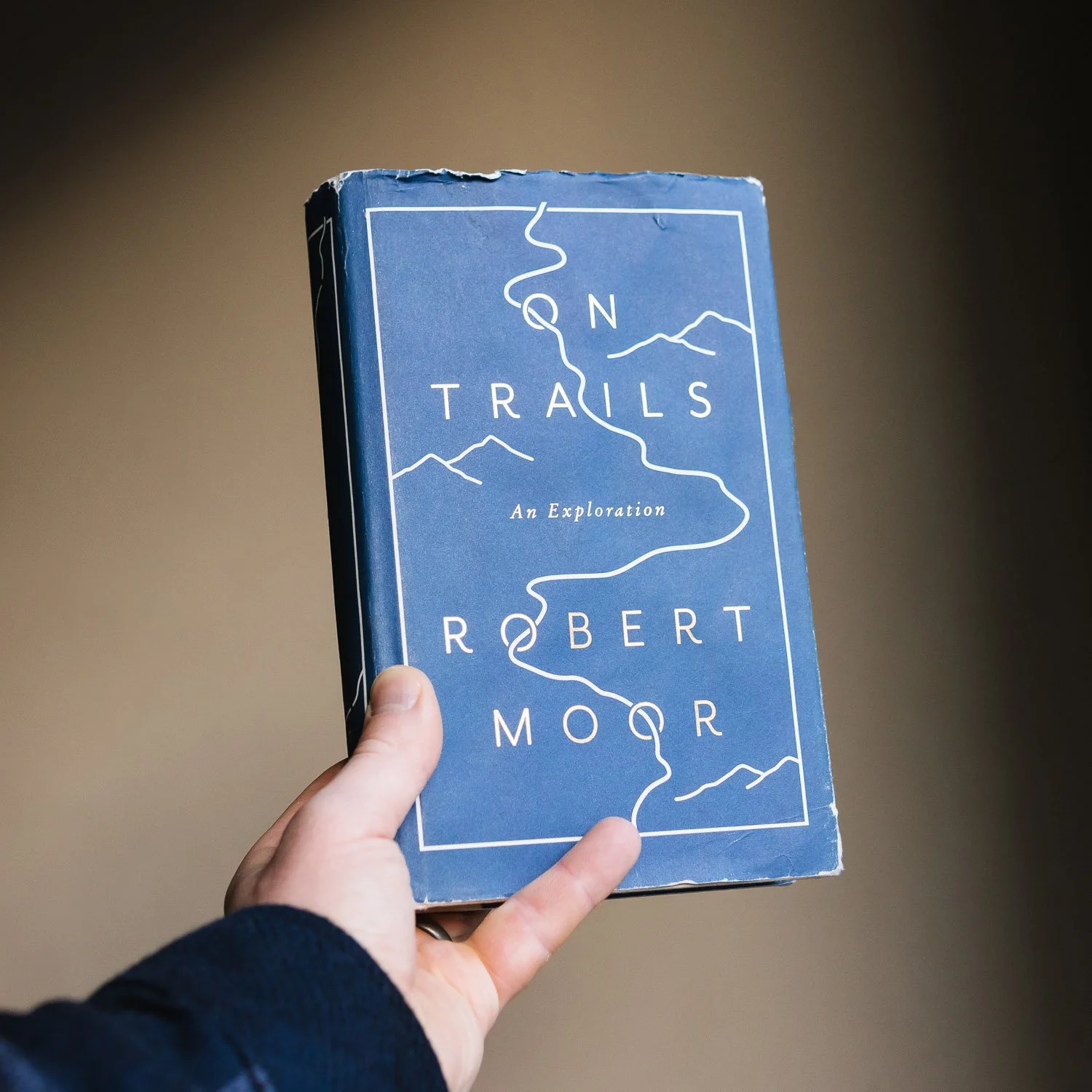
My well-worn copy of On Trails: An Exploration by Robert Moor
I began reading On Trails halfway through the holiday, becoming instantly enthralled by the author’s research on pathways and their importance in our lives and the natural world as a whole. Given how I was spending my mornings at the time, I felt an immediate affinity with the topic and found myself racing through the pages with the same enthusiasm I brought to the runs.
As we sat reading on the rear terrace of the cottage one sunny afternoon, the book began to discuss an International leg of the world-famous Appalachian Trail. It told the story of Dick Anderson and his efforts to extend the established AT route in the USA by incorporating all other areas of Appalachian geology worldwide—areas that had formed together on the supercontinent Pangea but had been separated during the formation of the Atlantic Ocean some 200 million years ago. I was instantly intrigued. When the existence of an Irish section of the IAT was mentioned for the first time a few pages later, the intrigue turned to complete surprise—I’d somehow never heard of it.
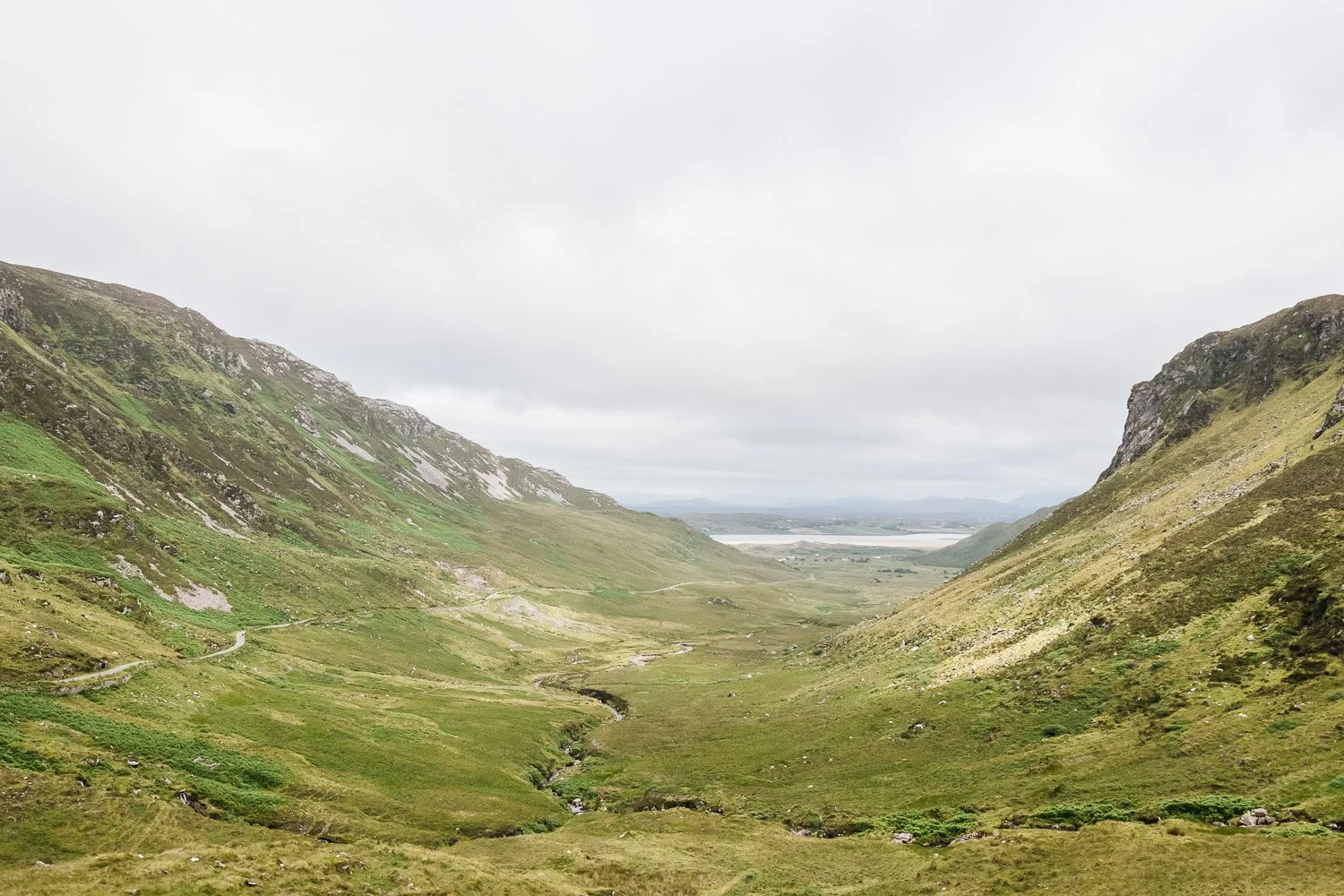
View along Granny Pass in Donegal towards Maghera beach, with the IAT Ulster-Ireland route on the left hand side
Within seconds I was fetching my phone from the kitchen, furiously Googling for any information I could find. And it was at that moment the first—and perhaps most unbelievable—coincidence occurred: the International Appalachian Trail ran no more than ten metres from where I was standing.
As the route map revealed, the very boreen used to access our cottage on the steep hillside above Glencolmcille formed a section of the IAT—and so did many of the walking paths used for my morning runs earlier in the holiday. Further frantic panning and zooming of the map even showed the two swimming spots from the previous day’s trip out in the car.
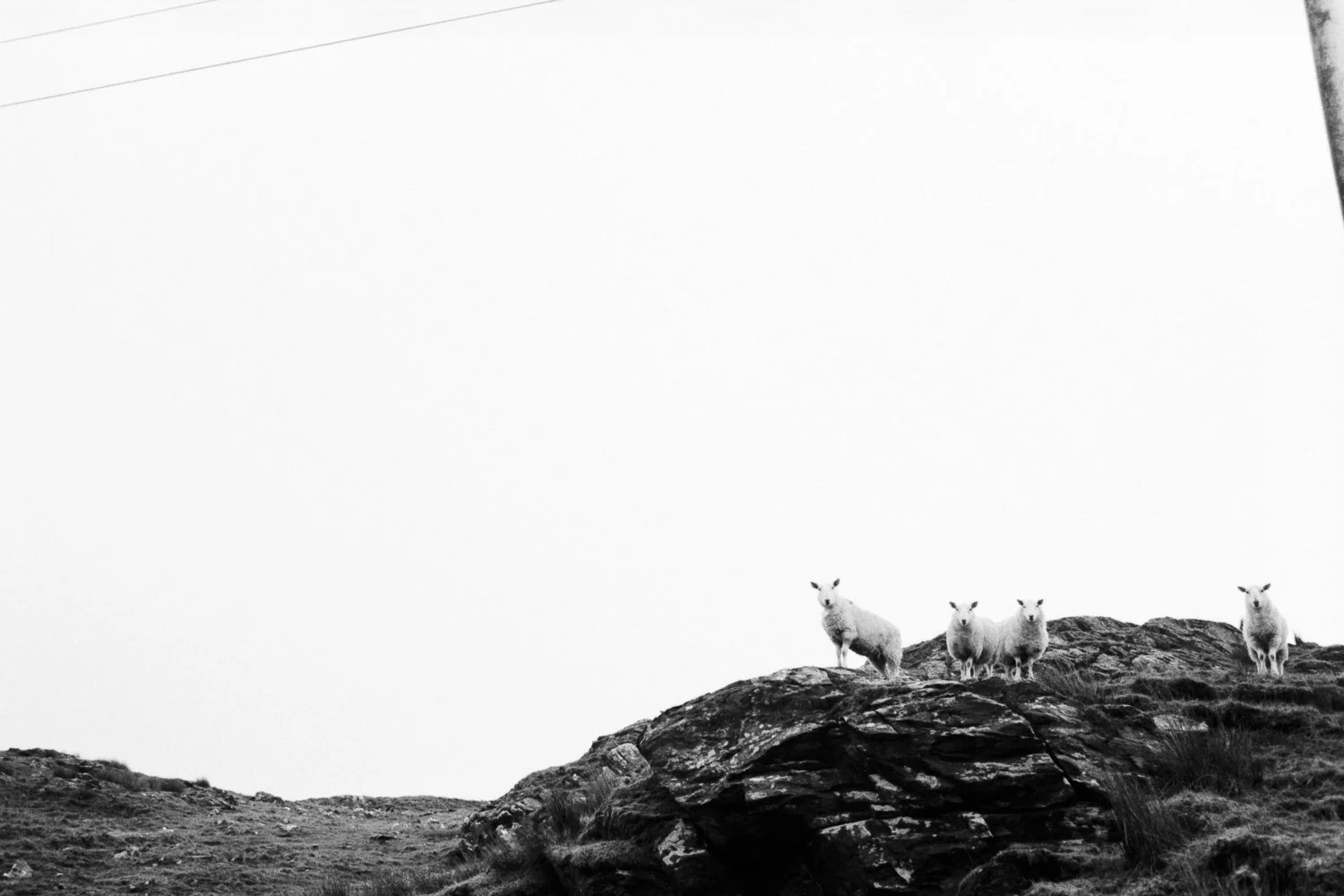
Under careful watch outside the cottage’s front door
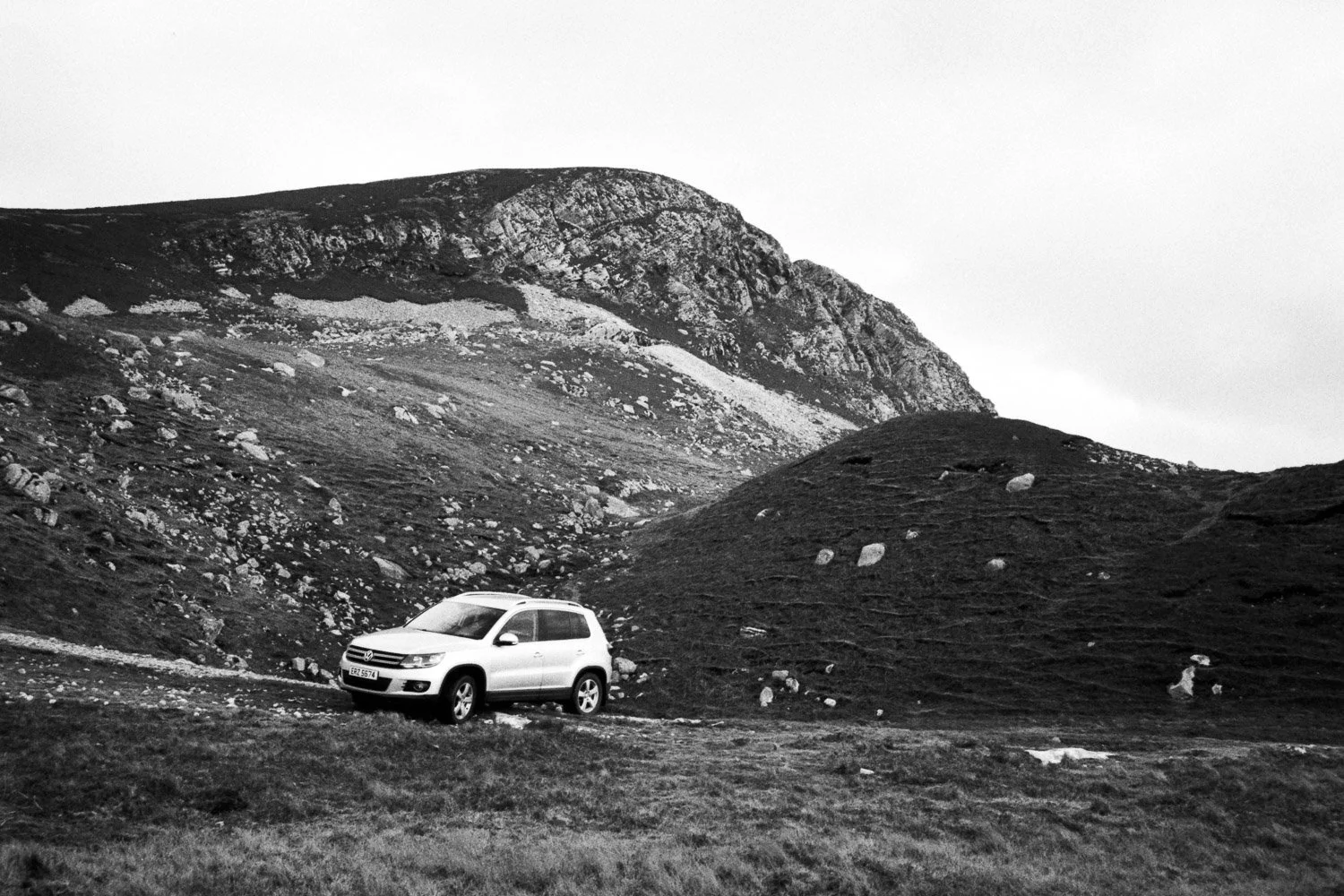
Unknowingly driving my Tiguan along the IAT Ulster-Ireland
[above] film photos unknowingly taken on the IAT during a trip to the cottage in 2016 • Leica M6, Voigtlander 35mm f/2, Tri-X +2, home dev
And the connections kept on coming: the beach where we got engaged; the forest park where I spent countless weekends as a kid and still ran regularly; the hotel where we held our wedding; Scout camp locations from my teenage years; favourite gravel bike fireroads; landscape features I had photographed many times—they all featured directly on the route. The IAT Ulster-Ireland seemed to tell the story of my life.
Over the next few months my fascination with the route knew no bounds. I began to incorporate it into my regular training runs, breaking its 279 miles into smaller sections that I could tackle in a single day. When I wasn’t running the trail, I was hiking, biking, or camping along it instead, always with a camera in tow. I yearned to know every inch of the terrain, become familiar with every view. To understand the history, the geology, and the unstoppable forces of nature behind its formation. To forge new memories alongside the old ones and, in doing so, finally feel a real connection with the country where I was born.
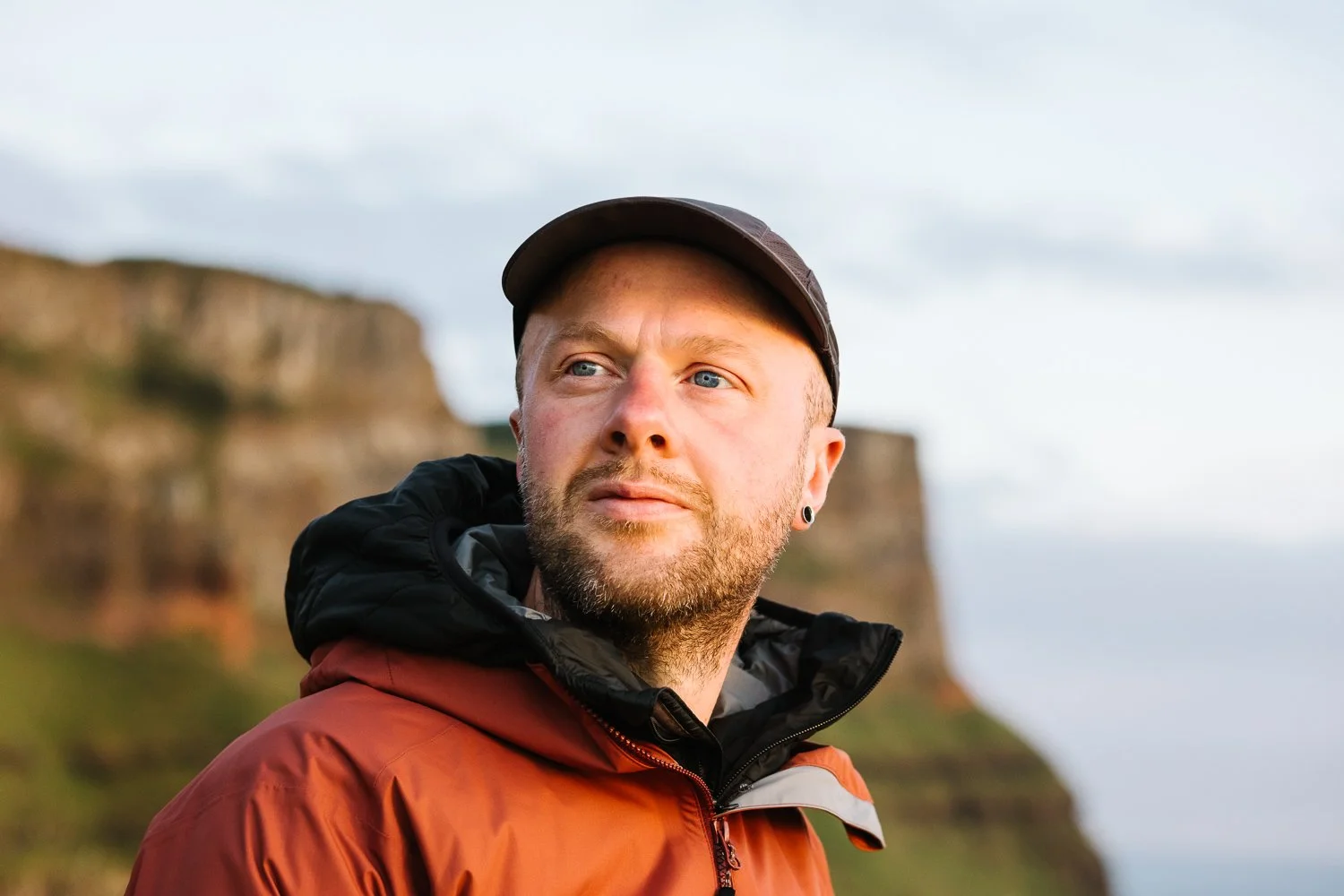
6am self portrait on the Causeway Coast
I had often struggled with my sense of place as a teenager. Growing up without a religion in a land both governed and divided by it, where our identities and social connections were largely defined by our belief systems, had led to feelings of isolation from my peers and a frustration towards the powers that be. I often felt boxed in by social constructs built around beliefs I didn’t even share. As an adult, this feeling of separation progressed beyond the people to the island itself, with the grass always seeming much greener (not literally, of course) elsewhere, far away from the treeless and tamed landscapes of home. I just never felt like I truly belonged, and I was hopeful that the time spent on trail, along with a deeper understanding of the island’s geological past, might help me to finally put down some emotional roots and feel content where I was.
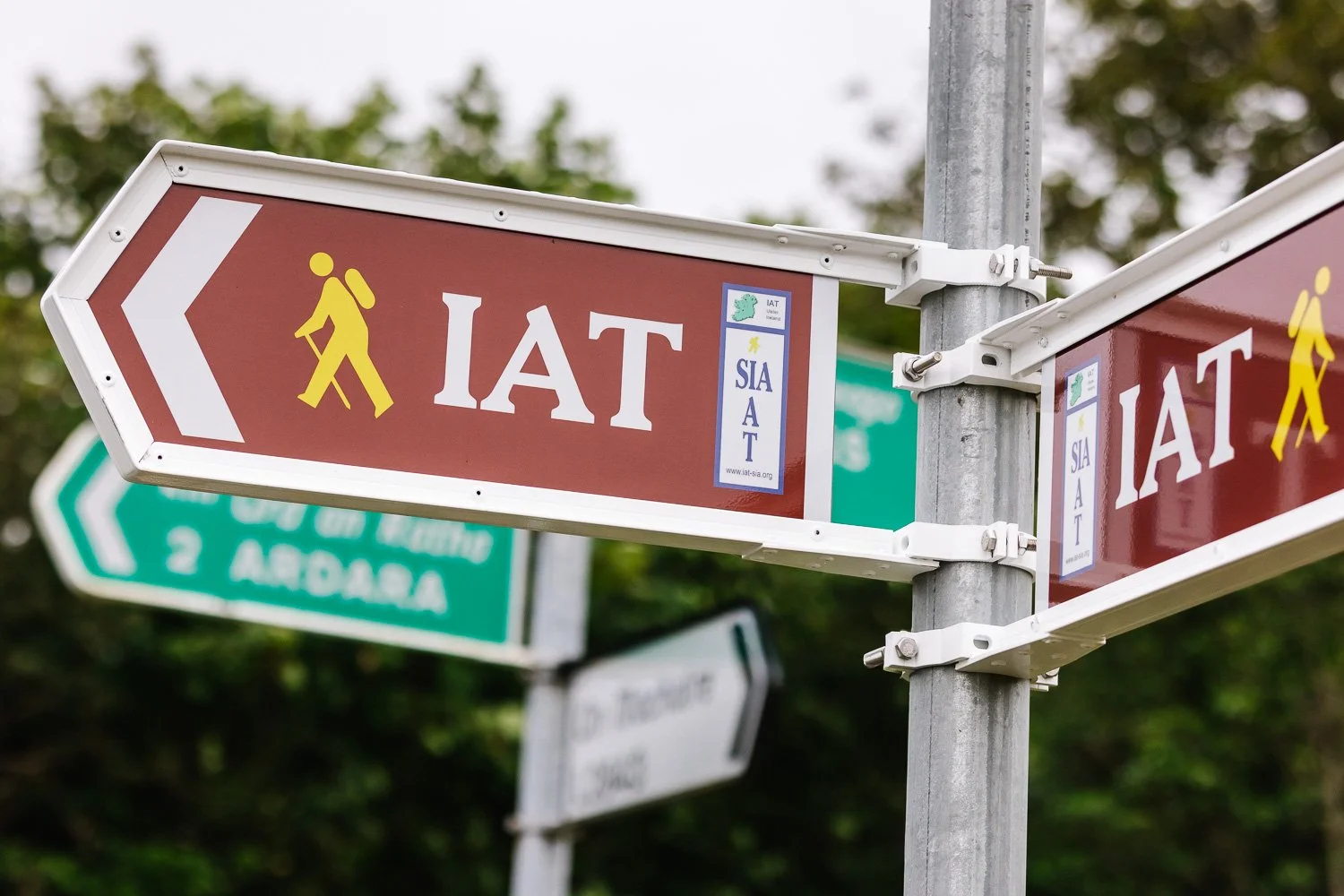
Trail signage outside Ardara in Donegal
The following July I was in Limavady one morning to deliver wheelsets to a local bike repair workshop. Ciaran, the shop owner, is a friend as well as a customer, so there was plenty to chat about with him over a pot of coffee. At the time we were both experiencing some post-pandemic cycling industry burnout, along with ongoing supply chain issues, and I divulged to him the desire to dip my toes back into the creative freelancer world I’d left behind in 2017, having enjoyed documenting my time on the IAT on Instagram throughout the previous year.
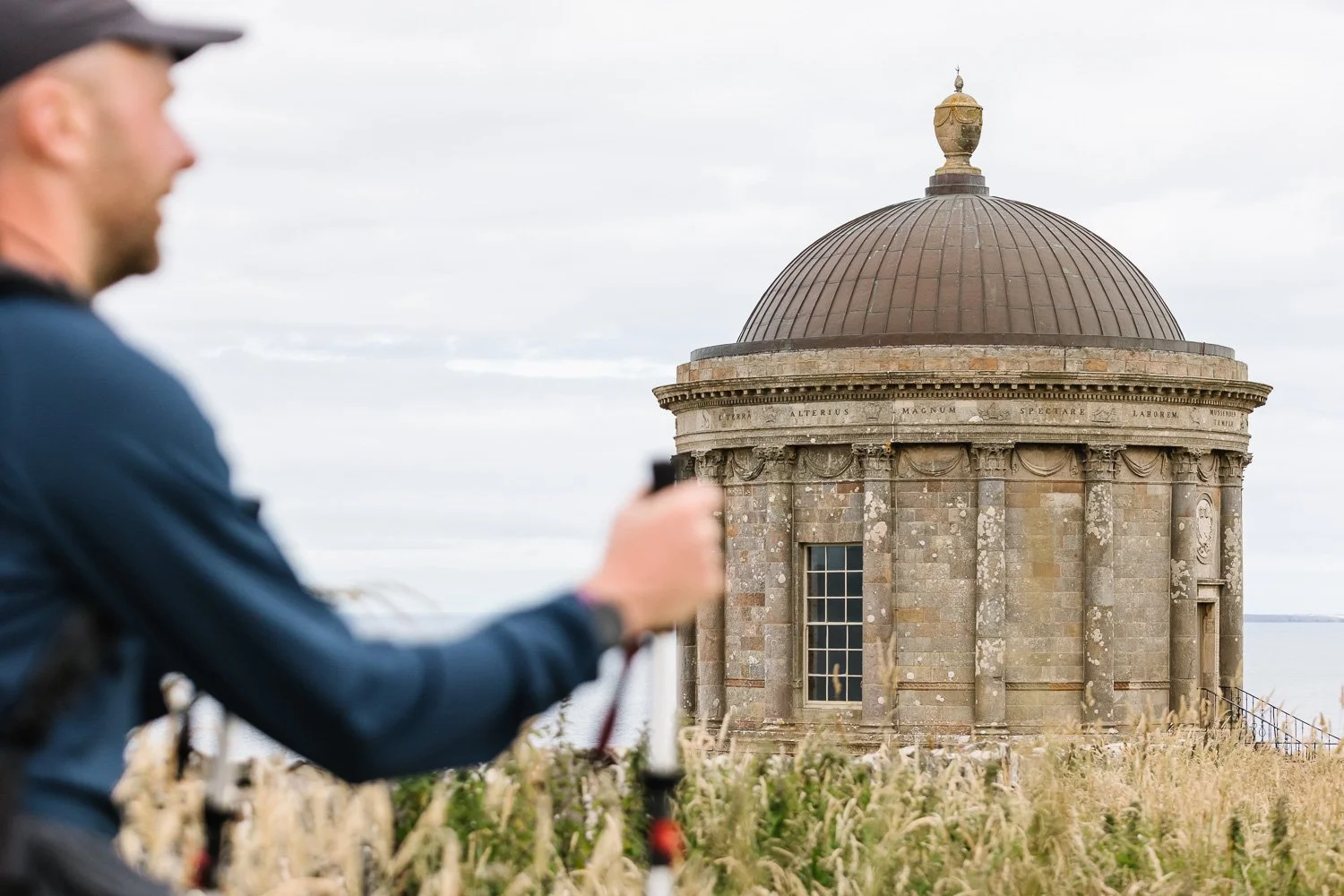
Mussenden Temple is worth the very short detour from the IAT Ulster-Ireland route
The drive home from Ciaran’s workshop took slightly over an hour that day, and as I parked up and turned off the grumbling diesel engine, I automatically reached for my phone to decompress for a few moments before heading indoors. Refreshing my business email loaded a message that had arrived at some point during the journey back, and with the subject line reading ‘Article for Swiss 4-Seasons Magazine?’, I instantly pressed open.
‘Dear Colin, I'm looking for a story about trekking the International Appalachian Trail for the next issue of the Swiss outdoor magazine 4-Seasons… would you be interested… ?’
Thanks to an Instagram hashtag search by the editor, the opportunity to write and photograph a magazine article had just fallen into my lap, less than an hour after discussing the desire to do so with Ciaran. It was an astonishing coincidence—another in the ever-growing list relating to the IAT.
‘Hi […], many thanks for getting in touch. I would be delighted to…’
What followed were the most enjoyable weeks of work I’d had in years. Nights under the stars, meals cooked outside, hikes through some of the best scenery we have on offer—all while documenting the moments with the camera on self-timer. It was the creative shot in the arm that I desperately needed, at exactly the right time.
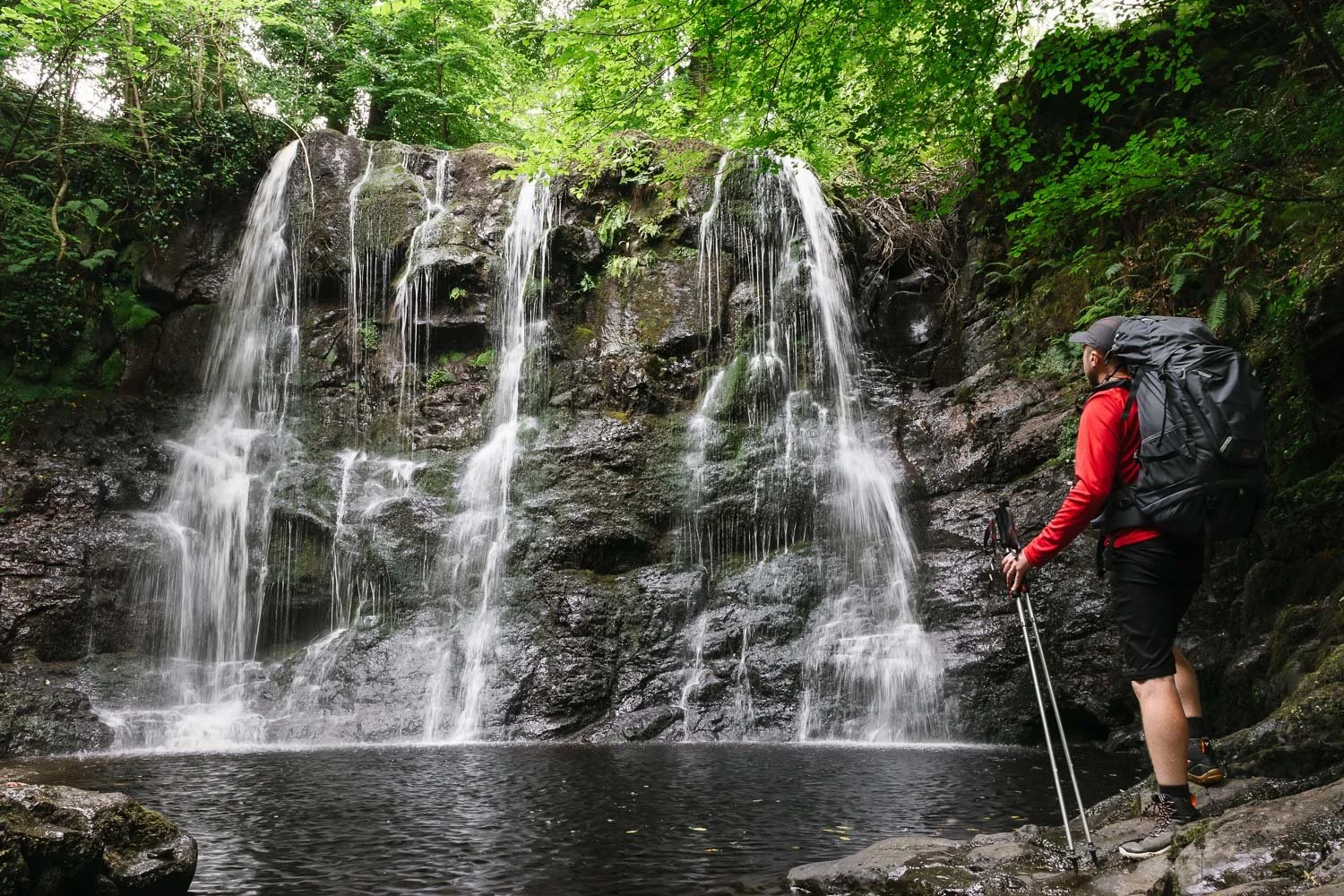
Ess-Na-Crub Waterfall in Glenariff—one I’ve been visiting since childhood
The naturally slower pace of shooting on trail with a tripod and timer really allowed me to enjoy the surroundings as I worked. And the more I enjoyed myself, the more determined I became to do Ireland’s natural beauty justice in the article. A sense of pride in the landscapes in front of the camera grew daily.
This feeling of pride was reinforced by the research into Ireland’s geological links to Appalachia and the remarkable journey our landmass has made over the last one billion years. As an example, gaining the knowledge to distinguish the 60 million year old basalt layers on our north coast from the far older basalt layers beneath them, and then spending a truly magical evening camping in the shadow of their massive columns, inspired awe in a way like I’d never felt before. I was, at last, developing a profound appreciation for our small island, and it was all thanks to the IAT.
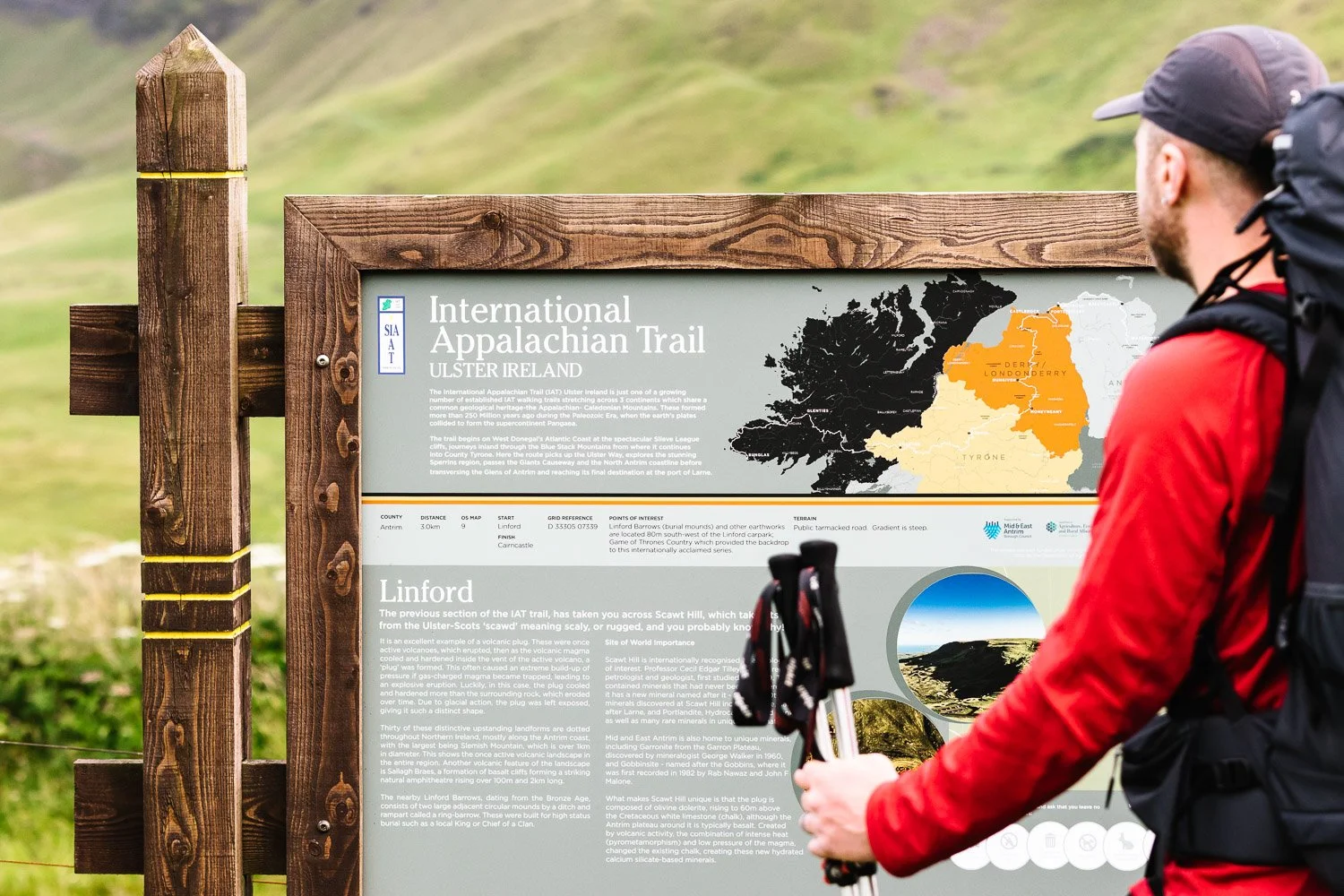
Trail signage at Linford in the Antrim Hills
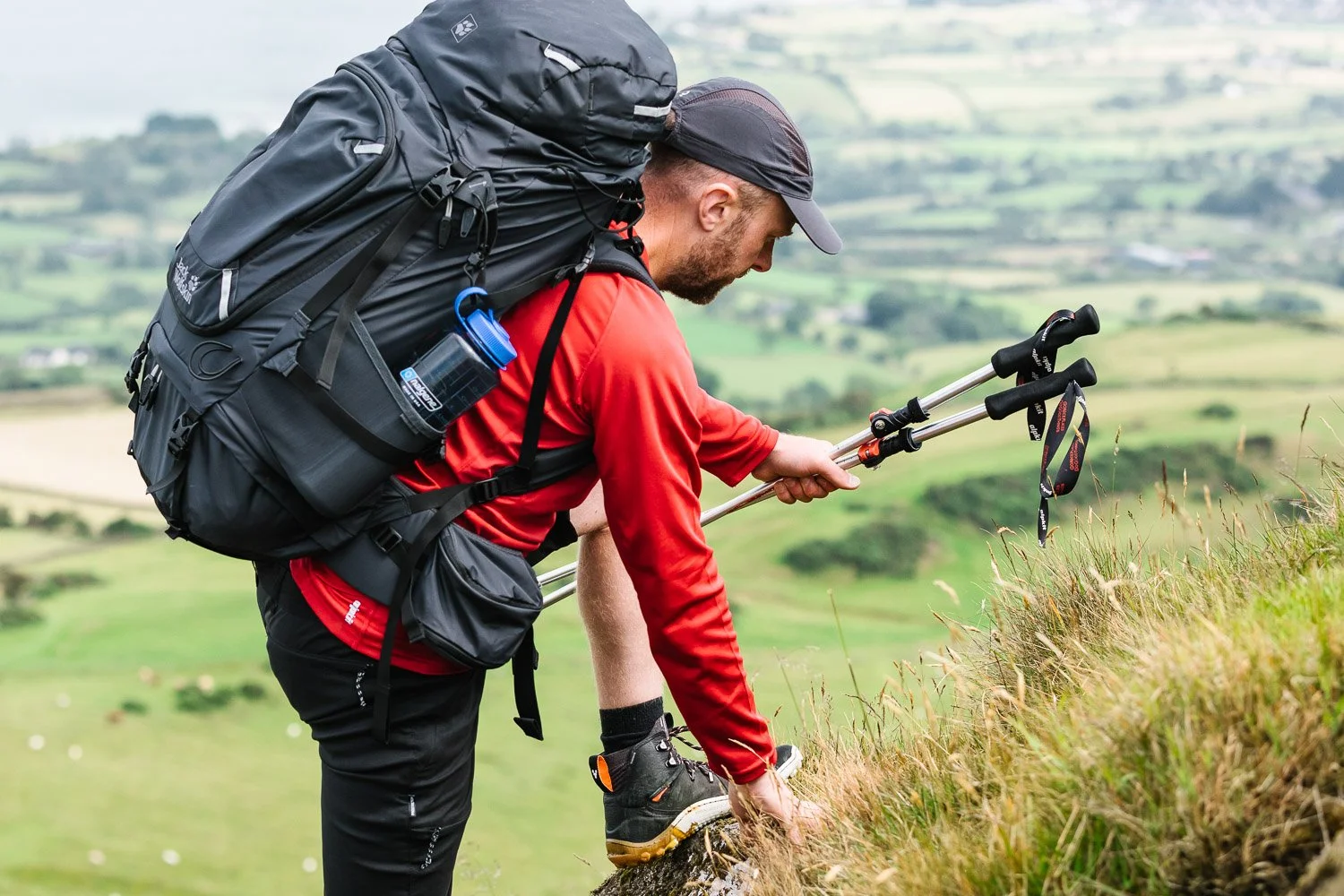
Climbing on Scawt Hill in the Antrim Hills
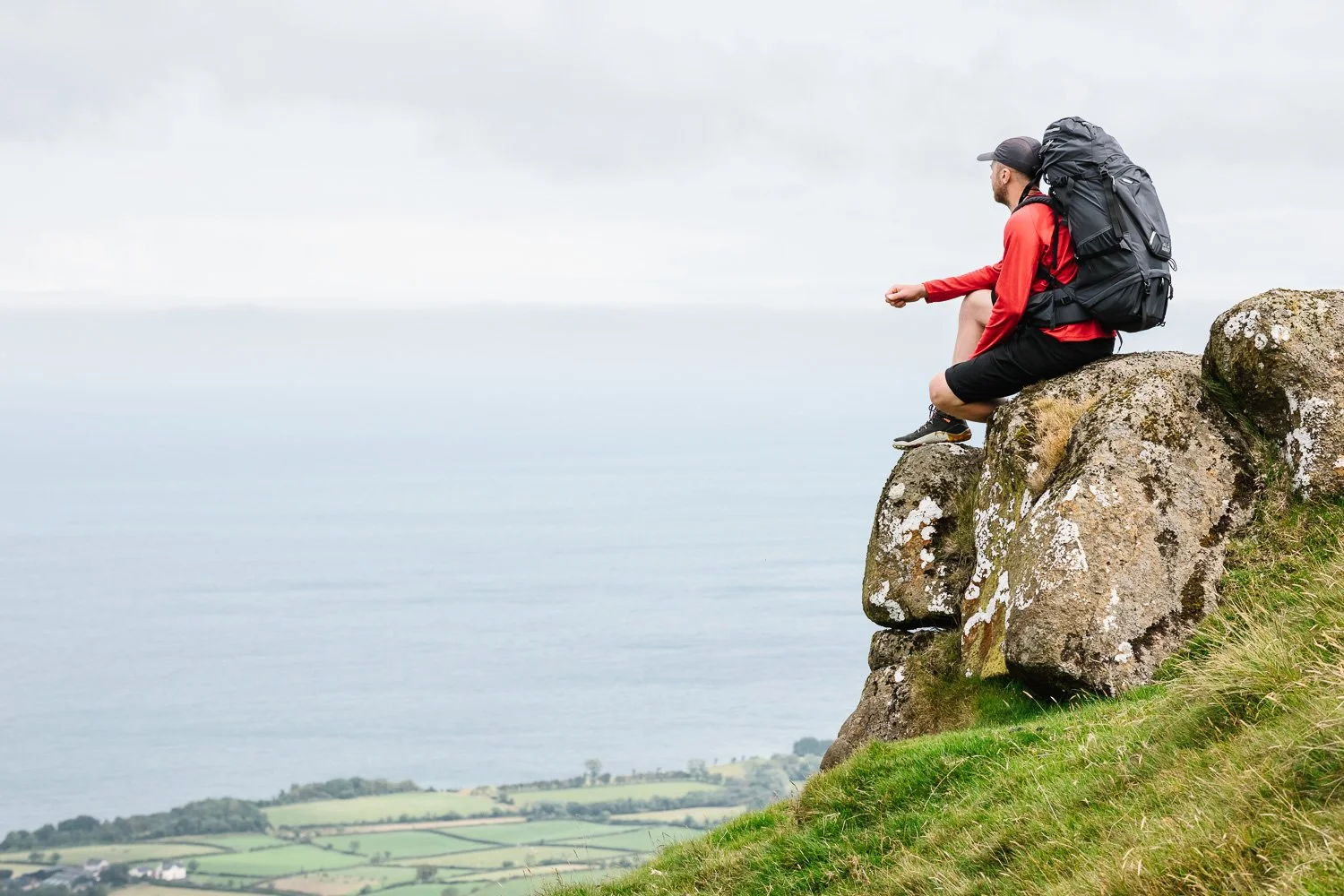
The view towards Scotland from Scawt Hill in the Antrim Hills
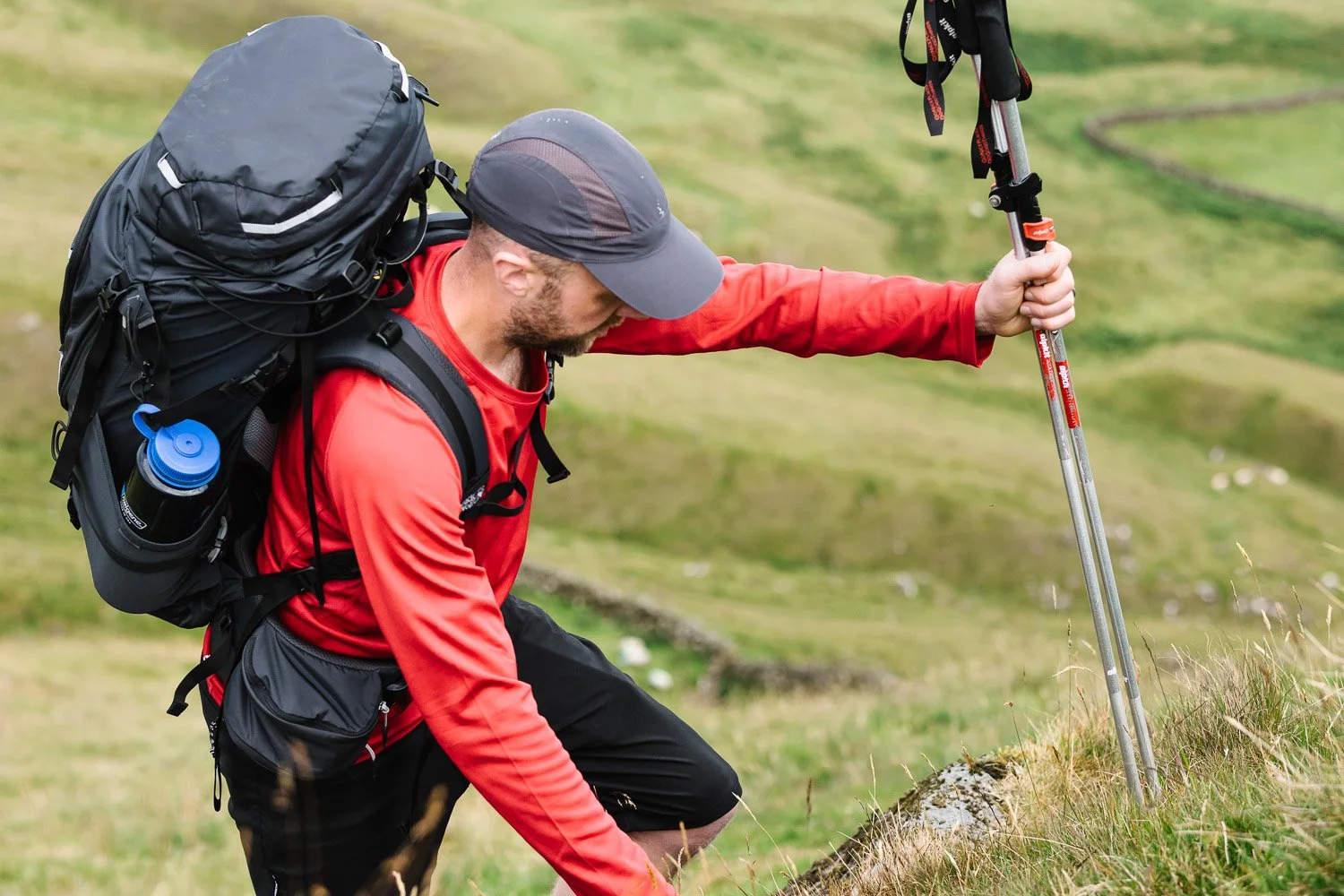
Climbing on Scawt Hill in the Antrim Hills
[above] an afternoon spent hiking over Scawt Hill in the Antrim Hills
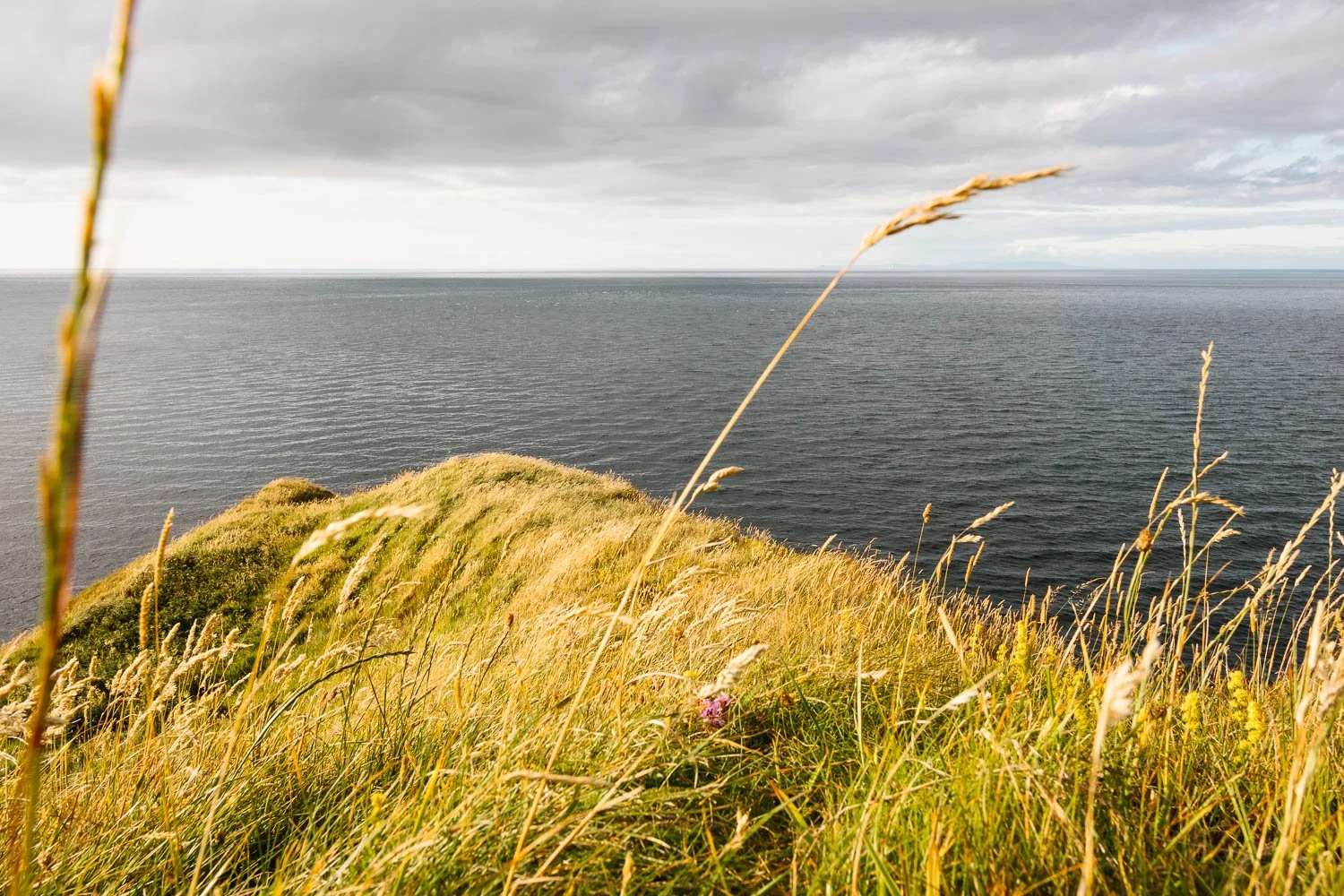
Sunset view on the Causeway Coast, looking towards a faint Islay in the distance
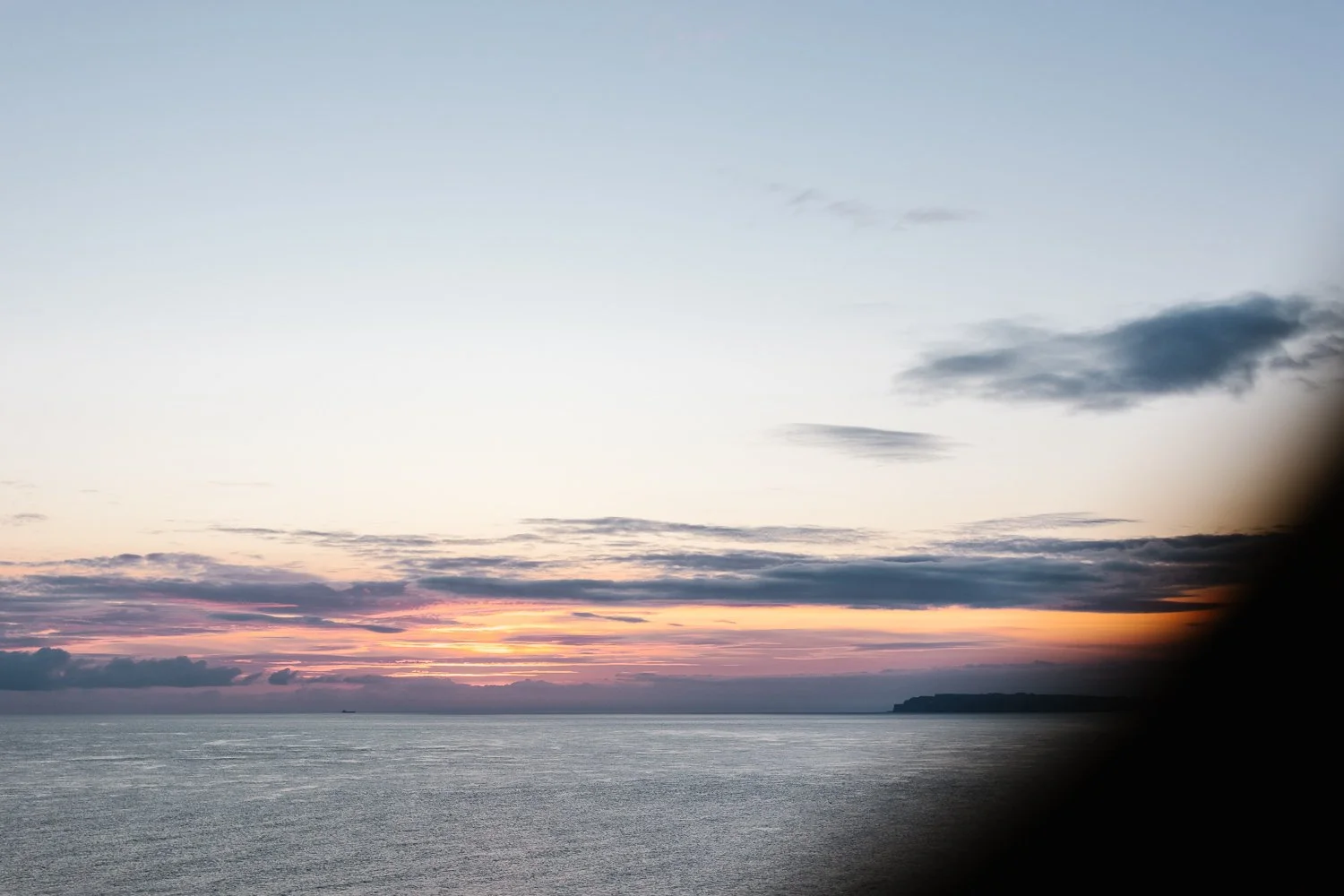
The sun rising behind Rathlin Island
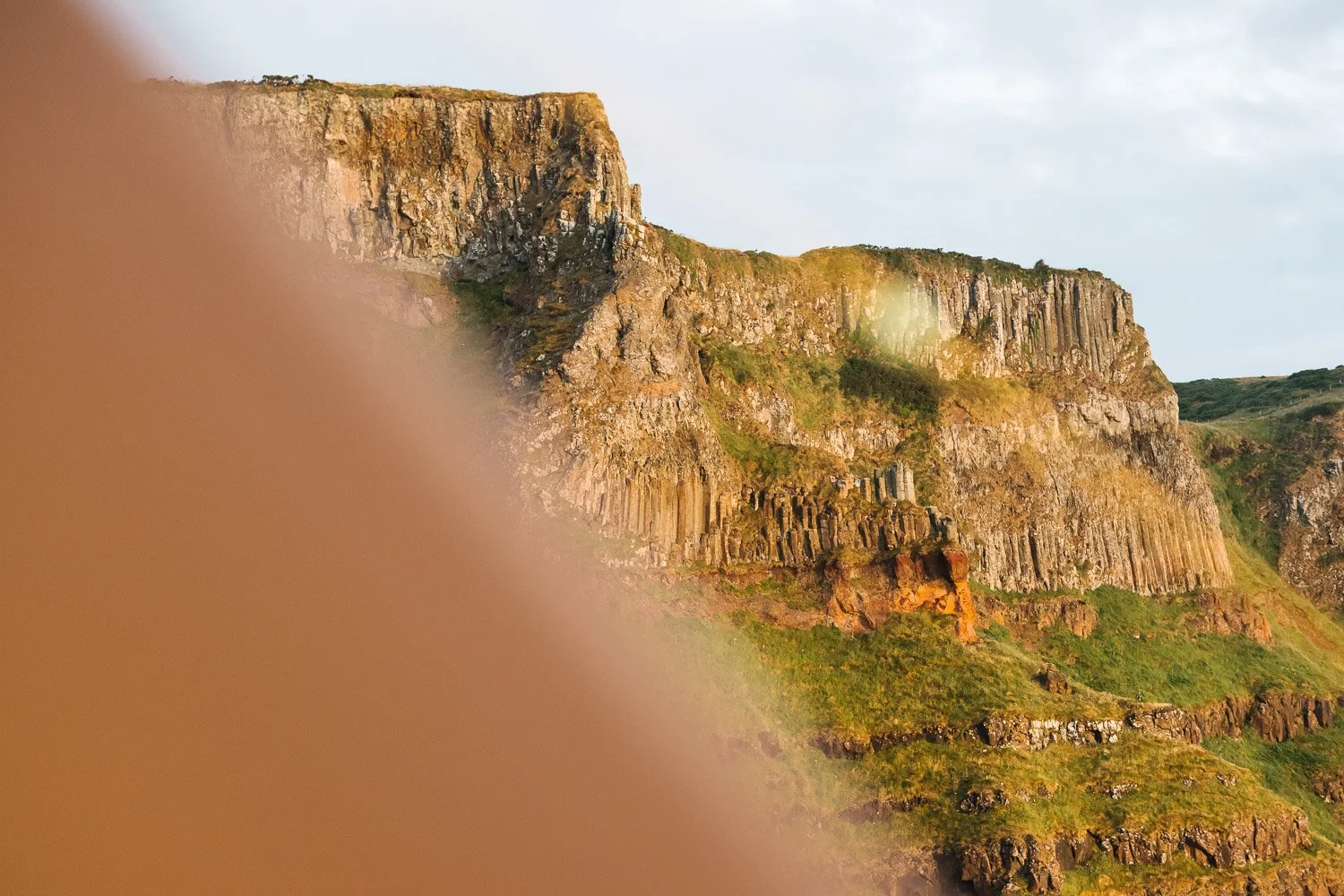
View from the tent of the Causeway Coast’s basalt cliffs at sunrise
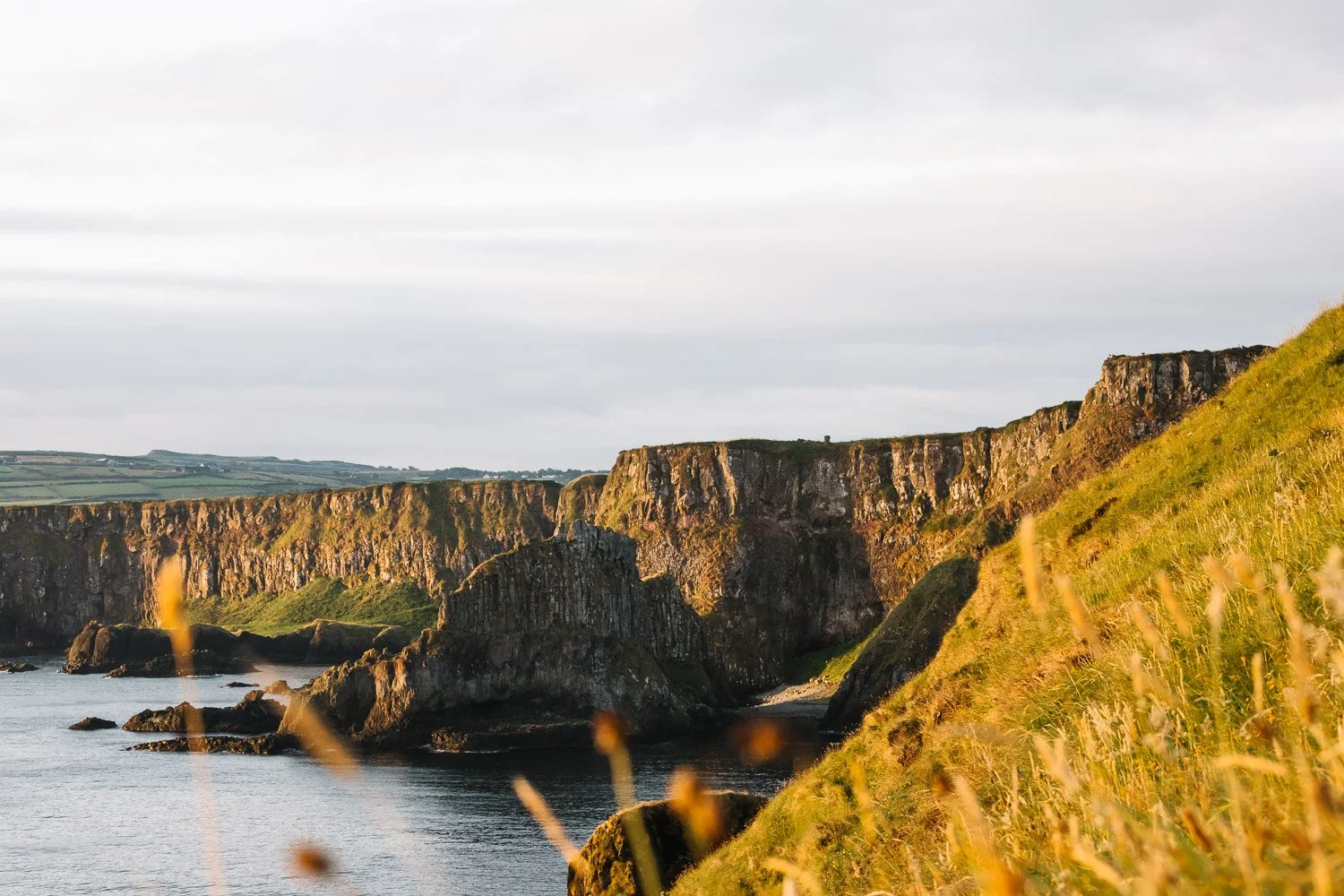
The view beyond Port Moon bothy in the early morning glow, with the distinctive basalt columns clearly visible
[above] these four are from the same magical camp on the Causeway Coast near Port Moon bothy
From the countless marathon training runs to the days spent researching and photographing the trail both for Transa and my own enjoyment, the experiences on the route over the last couple of years have been genuinely transformative. I now have a feeling of belonging on this island, which for so long had seemed painfully out of reach. A feeling, finally, that this is home.
Thanks to Transa for the opportunity to contribute to the magazine.